


The term "Janata Dal" refers to a political party in India, originating from the Janata Party coalition in the 1970s. Formed officially in 1988 through mergers, Janata Dal has undergone splits and realignments. The Janata Dal (Secular), or JD(S), a regional center-left party, emerged in 1999 from the Janata Dal split, led by former Prime Minister H.D. Deve Gowda. The JD(S) follows Social Democratic Secularism, opposing both BJP and Congress. Active in Karnataka and Kerala, it gained prominence in 2004, becoming the third-largest party in Karnataka. It briefly allied with the Congress but distanced itself, emphasizing opposition to communalism and corruption. As part of the Third Front, it criticizes both BJP and Congress.

The Biju Janata Dal (BJD) is a regional party in Odisha, founded in 1997 and named after the legendary former Chief Minister, Biju Patnaik. The party, rooted in secularism and value-based politics, is known for its commitment to Odisha's development. Led by Naveen Patnaik, the party emphasizes integrity, vision, and dedication inspired by Biju Babu's legacy. The BJD has participated in coalitions with the BJP but maintains a secular and democratic outlook, opposing communal forces. It prioritizes fighting corruption, uplifting weaker sections, and advocating for women, youth, farmers, laborers, and minorities. Under Naveen Patnaik's leadership, Odisha has seen significant growth and development.
POLITICS
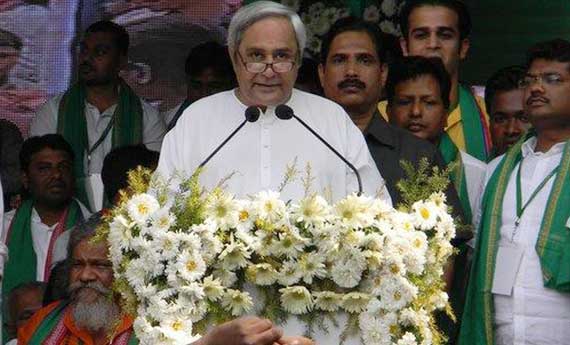
He founded the Biju Janata Dal (BJD), after the demise of his father late Shri Biju Patnaik, and started his political journey as an elected member of the 11th Lok Sabha being elected in the by-election from Aska Parliamentary Constituency in Odisha, India. Naveen Patnaik was the Union Minister for Steel & Mines, in the BJP led National Democratic Alliance (NDA) government at the Centre from 1998-2000. However, as the BJD won majority of seats in alliance with the BJP in the 2000 Odisha Assembly elections, Naveen Patnaik resigned from the Union cabinet and was sworn in as the Chief Minister of Odisha in 2000.
Due to the popularity of Naveen Patnaik and the BJD, the NDA was again victorious in 2004 and Naveen Patnaik continued as the Chief Minister. But the communal violence in Kandhamal district of Odisha in 2007-2008 and the subsequent carnage against Christians carried on in the district, seen as the handiwork of the Sangh Parivar, of which the BJP is the predominant constituent, was an eye-opener for him. A die-hard secularist Naveen Patnaik did all he could to restore peace and communal harmony in the district, and to build the confidence of the minorities. In the run-up to the polls for the Lok Sabha and Odisha Vidhan Sabha elections in 2009, BJD walked out of the NDA. The BJD won a resounding victory in both the Vidhan Sabha as well as the Lok Sabha elections in 2009, bagging 14 out of 21 Lok Sabha seats and 103 of the 147 assembly seats and was sworn in as the Chief Minister of Odisha on May 21 2009 for the third consecutive term.